
Introduction
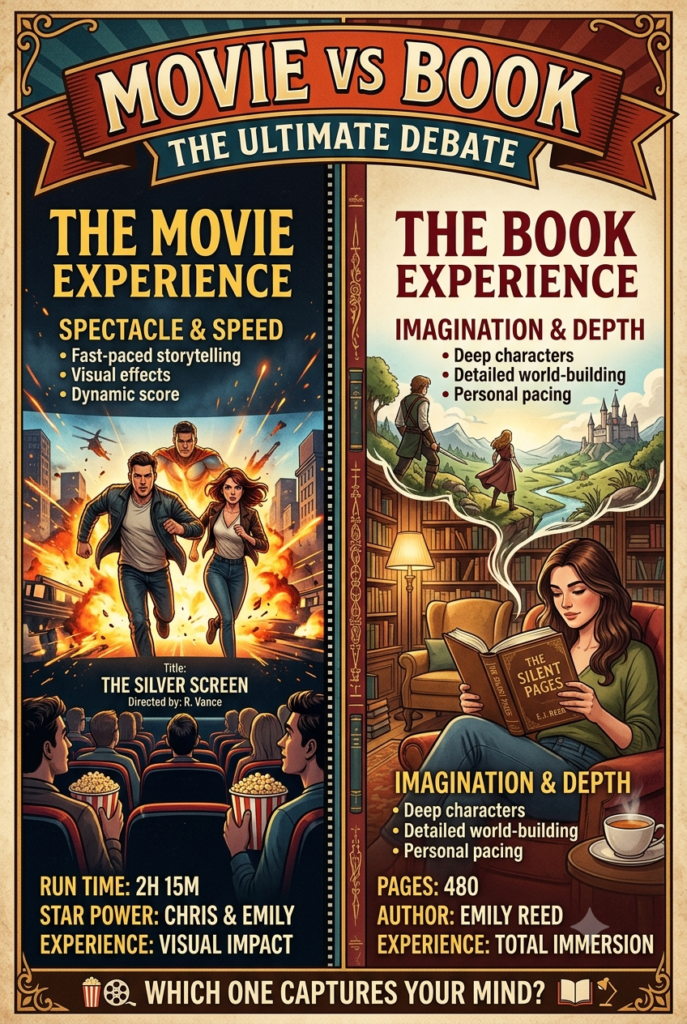
For decades, readers and movie lovers have debated one timeless question: Which Is Better: The Book or the Film? While books allow readers to imagine every scene, films bring stories to life with stunning visuals, memorable performances, and powerful soundtracks. This Book vs Movie Comparison explores the strengths and weaknesses of both formats and examines some of the most famous Books That Became Blockbuster Movies, including 2001: A Space Odyssey, The Enigma of Arrival, and Simon vs. the Homo Sapiens Agenda.
Why Books and Movies Tell Stories Differently
Books and movies share the same goal—to tell compelling stories—but they use different methods.
Books rely on descriptive writing, character thoughts, and detailed narration, allowing readers to create the world in their imagination. Movies, on the other hand, use visuals, music, dialogue, and performances to create an emotional experience in a shorter amount of time.
Neither format is inherently better. Instead, each offers a unique way to experience the same story.
Which Is Better: The Book or the Film?
The answer depends on what you value most as a reader or viewer.
Why Many Readers Prefer Books
More detailed storytelling
Rich character development
Greater emotional depth
Complete author’s vision
Freedom to imagine characters and settings
Books often include scenes, conversations, and internal thoughts that cannot easily fit into a two-hour film.
Why Many People Prefer Movies
Faster and easier to experience
Stunning cinematography
Memorable performances
Emotional music and visual effects
Ideal for people with limited reading time
Movies can make stories accessible to audiences who may never pick up the original novel.
Book vs Movie Comparison: Advantages and Disadvantages
Books
Advantages
More detailed plots
Better world-building
Stronger character development
Original storytelling
Disadvantages
Requires more time
Less visual
Demands imagination and concentration
Movies
Advantages
Visually engaging
Faster storytelling
Great for family viewing
Memorable soundtracks and performances
Disadvantages
Important scenes may be removed
Limited runtime
Characters may feel less developed
Books That Became Blockbuster Movies
Many of the world’s greatest films started as books. While adaptations often make changes, they introduce classic stories to millions of viewers.
Some famous examples include:
The Lord of the Rings
Harry Potter
The Hunger Games
The Shawshank Redemption
Jurassic Park
The Godfather
These examples show how literature can inspire unforgettable cinematic experiences.
2001: A Space Odyssey Book vs Movie
One of the most fascinating examples in any Book vs Movie Comparison is 2001: A Space Odyssey.
Unlike many adaptations, the novel by Arthur C. Clarke and the film directed by Stanley Kubrick were developed simultaneously through close collaboration.
The Book
The novel explains many scientific concepts, character motivations, and the mystery surrounding the monolith. Readers receive detailed explanations that make the story easier to understand.
The Movie
The film focuses on visual storytelling rather than dialogue. Its groundbreaking special effects, unforgettable music, and symbolic imagery encourage viewers to interpret the story for themselves.
Which Version Is Better?
If you enjoy science fiction with clear explanations, the book may be the better choice. If you appreciate artistic filmmaking and visual storytelling, the movie offers a unique cinematic experience.
The Enigma of Arrival: Book vs Adaptation
The Enigma of Arrival by V. S. Naipaul is a reflective novel about identity, memory, migration, and personal transformation.
Unlike many popular novels, it has not received a widely recognized mainstream blockbuster film adaptation. The book’s introspective nature and emphasis on internal reflection make it challenging to translate directly to the screen.
For many readers, the novel remains the best way to experience its rich language, thoughtful observations, and emotional depth.
Simon vs. the Homo Sapiens Agenda: Book vs Movie
One of the most successful modern adaptations is Simon vs. the Homo Sapiens Agenda by Becky Albertalli, which inspired the hit film Love, Simon.
The Book
The novel explores Simon’s inner thoughts, friendships, family relationships, and personal growth in greater detail.
The Movie
Love, Simon streamlines the story for a broader audience while preserving its central message of acceptance, friendship, and self-discovery.
Which One Wins?
Readers looking for deeper emotional insight often prefer the book, while viewers appreciate the movie’s humor, heartfelt performances, and uplifting ending.
Why Movie Adaptations Change the Original Story
Many readers wonder why films rarely follow books exactly.
Common reasons include:
Limited runtime
Budget constraints
Audience expectations
Simplified storytelling
Changes for cinematic pacing
These adjustments help filmmakers create engaging movies while preserving the story’s core themes.
Should You Read the Book Before Watching the Movie?
There is no right or wrong approach.
Reading first lets you imagine the world as the author intended before seeing another interpretation on screen. Watching the movie first can spark curiosity and encourage you to explore the original novel for additional depth.
Many fans enjoy both experiences because each offers something unique.
Final Verdict: Which Is Better: The Book or the Film?
So, Which Is Better: The Book or the Film? There is no universal answer.
Books provide richer storytelling, deeper characters, and greater emotional insight, while movies deliver unforgettable visuals, performances, and shared cinematic experiences. The best choice depends on your personal preferences.
Whether you’re exploring 2001: A Space Odyssey, reflecting on The Enigma of Arrival, or enjoying Simon vs. the Homo Sapiens Agenda, both books and films offer valuable ways to experience remarkable stories. Rather than choosing one over the other, many readers and viewers discover that enjoying both creates the most rewarding experience.